
A Historical First
Beneath copious amounts of dust and dirt in the holy land. Archaeologists discovered, nestled on the eastern slope of Jerusalem’s Western Wall, a rare and astonishing find that has given new life to the word of Scripture and proven communications between the Judean Kingdom and the Assyrian Empire.
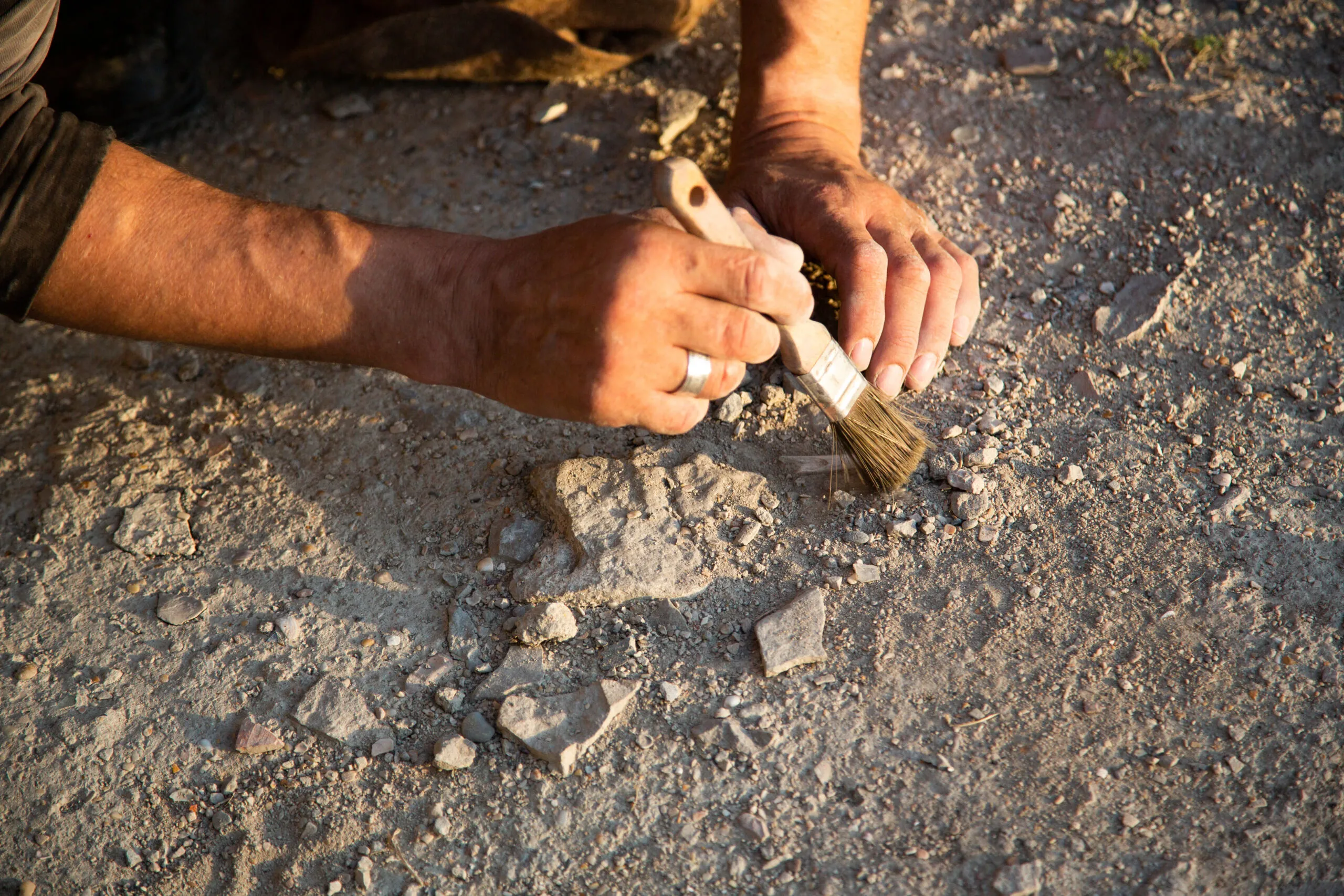
While conducting an archaeological excavation in a location where remains from the First Temple Period have been found before, archaeologists discovered a tiny pottery shard with a cuneiform inscription.
This inscription, in the Akkadian language, dates the find to about 2,700 years ago, officially making it the only Assyrian inscription from the First Temple Mount period (8th to 7th centuries BC) found in Jerusalem.

King Hezekiah
During the First Temple Period, Hezekiah was the King of Judah (reigning from the late 8th to the early 7th centuries BC).
His faithfulness to God, in contrast to his father’s idolatry, brought forth a period of religious reform and restoration in Jerusalem. He destroyed pagan altars and idols, reopened the Temple in Jerusalem, and re-established the Levitical priesthood and Passover celebrations.
His legacy, though, was tested and successfully cemented in history when the Assyrians invaded his kingdom.
In 701 BC, newly crowned King Sennacherib invaded Judah in order to stifle an ever-growing rebellion. He besieged Jerusalem in hopes of destroying it. King Hezekiah’s faith did not waver during the attack, and he prayed to God for salvation.
“And the LORD sent an angel who annihilated every mighty man of valor and every leader and commander in the camp of the king of Assyria. So he withdrew to his own land in disgrace.”
— Chronicles 2, 32:21
Hezekiah’s prayers were answered; his devotion and faithfulness brought salvation to his people, and the Assyrian army went home, disgraced and destroyed by the Lord’s angel.
Bringing the Bible to Life
The Israel Antiquities Authority has announced that the Akkadian inscription translates into an official request from Judah to delay payment to the Assyrian Empire. A discovery that further proves King Hezekiah’s bravery and faithfulness to the Lord.
“And the LORD was with Hezekiah, and he prospered wherever he went. He rebelled against the king of Assyria and refused to serve him.”
— Kings 2, 18:17
Scholars are exploring the chapters of Scripture as a possible link to the pottery shard found in Jerusalem. In Kings 2, Hezekiah rebels against the Assyrian Empire and refuses to pay tribute, thus starting an official declaration of revolt, and later on, war.
After successfully translating the inscription, archaeologists were astonished to find further proof of the story when part of the inscription turned out to be a royal seal impression, dating to the time of Sennacherib, King of Assyria, the same ruler against whom Hezekiah rebelled.
The inscription includes a due date, the first of Av (July–August), and mentions a chariot officer, a high-ranking position responsible for relaying official messages from the royal house. Researchers believe the inscription might be an official political and deliberate move from Hezekiah himself, a tax revolt against the Assyrian Empire.
The tangible excitement surrounding the find and its implications is astonishing. The characteristics of the inscription, along with its dating to Sennacherib’s reign, bring the word of Scripture to life, connecting us to our past through a small yet significant shard of pottery.
The story of Hezekiah with Immanuel Tours
Hezekiah’s story and legacy remain tangible and physical to this very day in the Holy Land of Israel.
During your next Israel christian tour, join Immanuel Tours to see the Siloam Tunnel, built by King Hezekiah to reroute water away from the Assyrians besieging Jerusalem. This tunnel, chiseled through solid rock, allowed passage to what would become the Pool of Siloam, the same pool where, later on, Jesus Himself healed a blind man.
“After saying this, he spit on the ground, made some mud with the saliva, and put it on the man’s eyes. ‘Go,’ he told him, ‘wash in the Pool of Siloam.’ So the man went and washed, and came home seeing.”
— John 9:6–7
Visiting the city of Jerusalem is a must during one’s pilgrimage to the Holy Land, and Immanuel Tours is honored to accompany you to the Pool of Siloam and the many other areas where Scripture and history intertwine.
Discoveries like this remind us that the Word of God is alive and tangible, written not only in Scripture but in the very stones of this land.
Join us at Immanuel Tours and experience the history, faith, and wonder of Israel. Plan your next tour group to begin your journey.
Further reading and references:
Rare evidence for royal Assyrian court communication to the king of Judah uncovered in Jerusalem